
Beyond the Guidebook:
A Travel Advisor's Insider Secrets & Hidden Gems
Hey there! After spending 28 years exploring hidden corners of five continents, I've collected travel secrets you won't find in any guidebook. As a luxury travel advisor specializing in personalized itineraries and authentic experiences, I'm here to share the exclusive destinations and insider tips I've discovered through my global network of local guides and boutique hoteliers. My blog is where wanderlust meets expert curation—whether you're seeking inspiration for bucket list adventures or ready to transform your next vacation into an extraordinary journey with VIP access and bespoke accommodations. I've personally vetted these experiences and can't wait to help you discover the authentic cultural immersions and hidden gems that make travel truly magical!
Ready to Start Your Journey?
Let's create your perfect travel experience together. Schedule a complimentary consultation
to discuss your travel dreams and preferences.
Read My Blogs

Relationship-Friendly Itinerary: More Connection, Less Chaos (The Simple Formula)
Let’s talk about the kind of trip that feels good while you’re living it — not just in the photos afterward.
Because “relationship-friendly” doesn’t mean boring, slow, or watered down. It means intentional.
And I don’t care if you’re traveling with your partner, your best friend, your sister, your adult kids, or your mother-in-law (bless) — the truth is the same:
Most vacation tension isn’t about the destination. It’s about the itinerary.
I’ve spent 31 years traveling (83 countries and counting) and I’ve planned hundreds of
custom trips as a travel advisor. And I’ve watched the same pattern play out over and
over: people spend good money on a dream destination… then accidentally build a
schedule that makes everyone feel rushed, cranky, or depleted.
So let’s fix it.
Quick Answers (for the “just tell me” crowd)
What is a relationship-friendly itinerary?
A relationship-friendly itinerary is a travel plan designed to protect pace, privacy, and wow moments—so you come home feeling closer, not exhausted.
What’s the fastest way to reduce conflict on a trip?
Stop over-scheduling and reduce hotel changes. Those two adjustments alone lower stress fast.
How many big activities should you plan per day?
For most trips: one anchor experience per day is the sweet spot.
What makes an itinerary “relationship-friendly”?
A relationship-friendly itinerary protects three things:
1) Pace (so everyone can actually relax)
If every day feels like a sprint, nobody’s connecting — they’re surviving. A great trip has space, not just plans.
2) Privacy (so you can be a real human)
Privacy isn’t just a luxury-suite thing. It’s “less friction”: smoother transfers, the right hotel vibe and location, a room setup that doesn’t make everyone feel on top of each other, and built-in quiet time (without guilt).
3) Wow moments (so it still feels special)
Relationship-friendly doesn’t mean “do nothing.” It means the right wow, not nonstop wow until you’re numb.
“A relationship-friendly itinerary isn’t about doing less — it’s about doing the right
things with enough space to actually enjoy each other.”
— Ashley Bullard, founder of J & A Travel Adventures
The Relationship-Friendly Itinerary Formula (steal this)
1 anchor experience per day — One meaningful “memory maker” (private guide, food tour, winery day, scenic boat ride, cooking class, a show—whatever fits your people).
1 unscheduled pocket per day — A built-in window for wandering, napping, a long lunch, shopping without a stopwatch, or sitting somewhere pretty doing absolutely nothing (elite travel skill).
Minimum 2 nights per stop (3 is even better) — Frequent hotel changes are a stealth stress multiplier: packing → check-out → transfer → check-in → re-orient → repeat. That’s how a trip becomes logistics-heavy instead of relationship-rich.

The most common itinerary mistake I see (especially with “big” trips)
People plan like this: “We’re going to Europe! So we should do 5 cities in 8 days!”
On paper, that sounds exciting. In real life, it creates decision fatigue, constant time pressure, tension over timing, and the feeling of never being fully “there” anywhere.
You don’t need to see everything. You need to feel the trip.
Trip styles that are naturally relationship-friendly
These styles support pace + privacy + wow without you fighting the itinerary the whole time:
1) Base-and-explore (my favorite for connection trips)
Choose one great home base and do easy day trips. Why it works: you unpack once, mornings feel calmer, you get familiar with a neighborhood, and you can repeat a favorite cafe (connection without trying too hard).
2) River cruising (quietly brilliant for connection)
It’s relationship-friendly by design: you unpack once, scenery comes to you, curated “wow” options don’t create chaos, and downtime is built in.
3) Two-stop trips (city + restore)
One energetic stop + one slower stop = best of both worlds.
4) Private guide + flexible schedule
Not “fancy.” Just smart. It removes the biggest stressors: figuring out logistics, wasting time in lines, and debating what to do next.
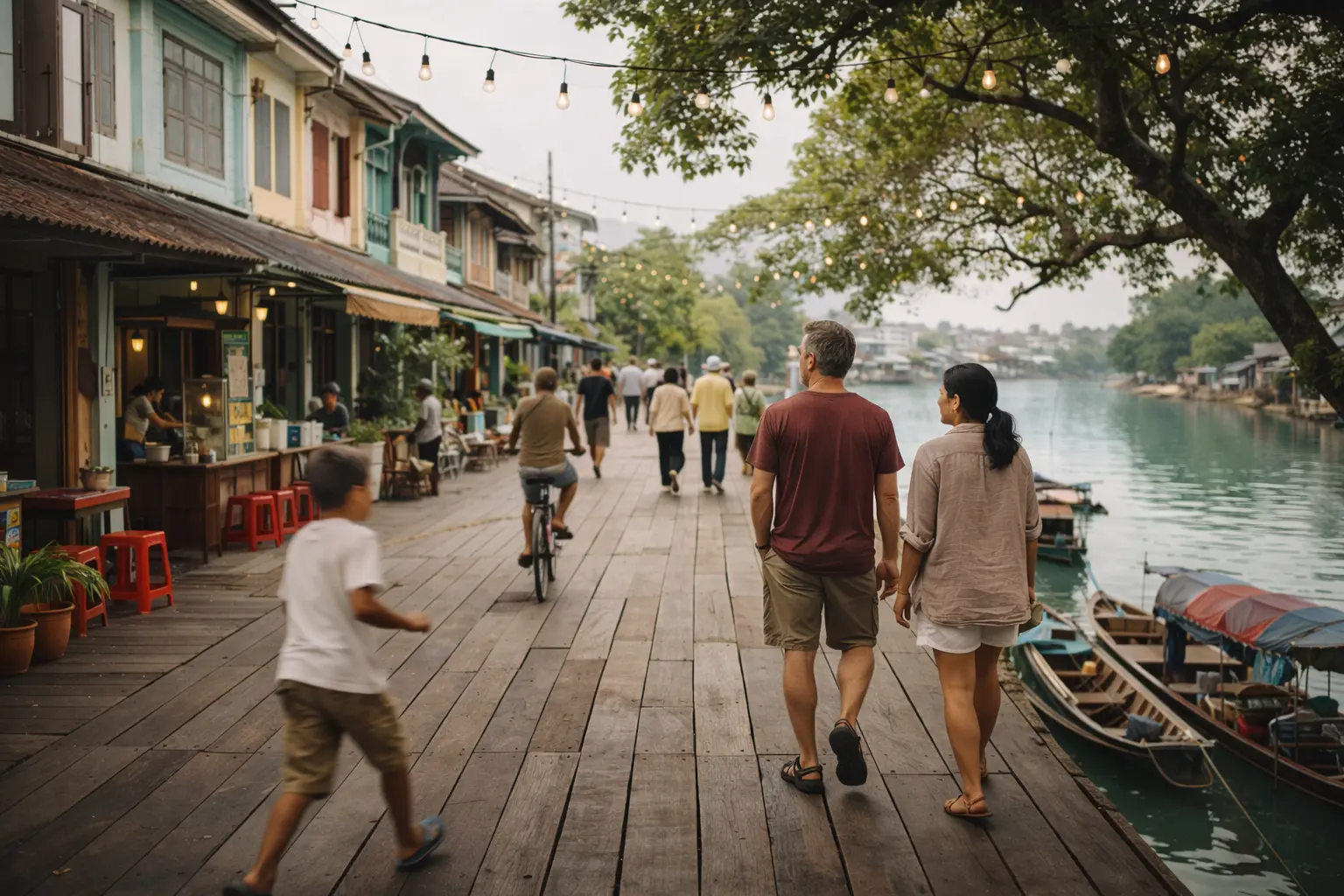
How to build privacy into a trip (without paying for a penthouse)
These are the “quiet upgrades” that protect the vibe:
Choose hotels for location, not just stars. Great location = less commuting = more ease.
Don’t stack early mornings. A couple early starts are fine. Every day? That’s a relationship tax.
Plan together time + solo time. The healthiest trips often include: “You do your thing for 2 hours, I’ll do mine, then we meet for dinner feeling refreshed.”
That’s not distance. That’s oxygen.

The “wow moments” rule (so you don’t burn out)
Here’s the rule I love: Plan wow moments every other day — not every single day.
That keeps wow moments feeling special, not expected.
Also: wow doesn’t always mean expensive. Sometimes wow is a sunset boat ride, a long meal with no rush, balcony coffee, one perfect guided experience, hot springs, a scenic train, or market wandering with snacks in hand.
A simple 7-day template (use this as your starting point)
Day 1: Arrive + settle + easy walk + great dinner
Day 2: Anchor experience + open pocket
Day 3: Light day (museum/market) + long lunch + downtime
Day 4: Bigger “wow” day (guided day trip)
Day 5: Unscheduled morning + optional afternoon
Day 6: Second wow moment + celebratory dinner
Day 7: Depart (and nobody feels like they need a vacation from the vacation)
Q&A:
How many cities should we do in a week?
For most travelers (especially in the “we want this to feel good” season of life): 1–2 bases is ideal. Three can work if transfers are easy and pacing is gentle.
What if we want to do “everything” because we might not come back?
Then we prioritize the top 2–3 must-do experiences and build the itinerary around those—so you get the memories and you keep the vibe.
What’s the quickest way to make a trip feel calmer?
Unpack fewer times. That one change is wildly underrated.

Want it built for you?
If you’d rather hand this off and have a relationship-friendly itinerary designed around your time, budget, and travel style, book a consult here: (insert your calendar link).
P.S. If you want a simple planning tool, I can send you my Relationship-Friendly Itinerary Checklist too. Just drop me a message.
Founder, J & A Travel Adventures



DESTINATIONS